
Try the Face Symmetry Test on Your Own Photo
Your photo never leaves your device
Face Symmetry Test: See the Left-Right Difference
A face symmetry test measures how evenly your features sit either side of your midline. Upload one front-facing photo and FaceReport maps the landmarks in your browser, scores your symmetry, and mirrors your detected contour back over the photo so the difference is something you can look at. The photo is never uploaded and never stored, and no account is needed. Free to use, for ages 16 and over.
Run My Symmetry Test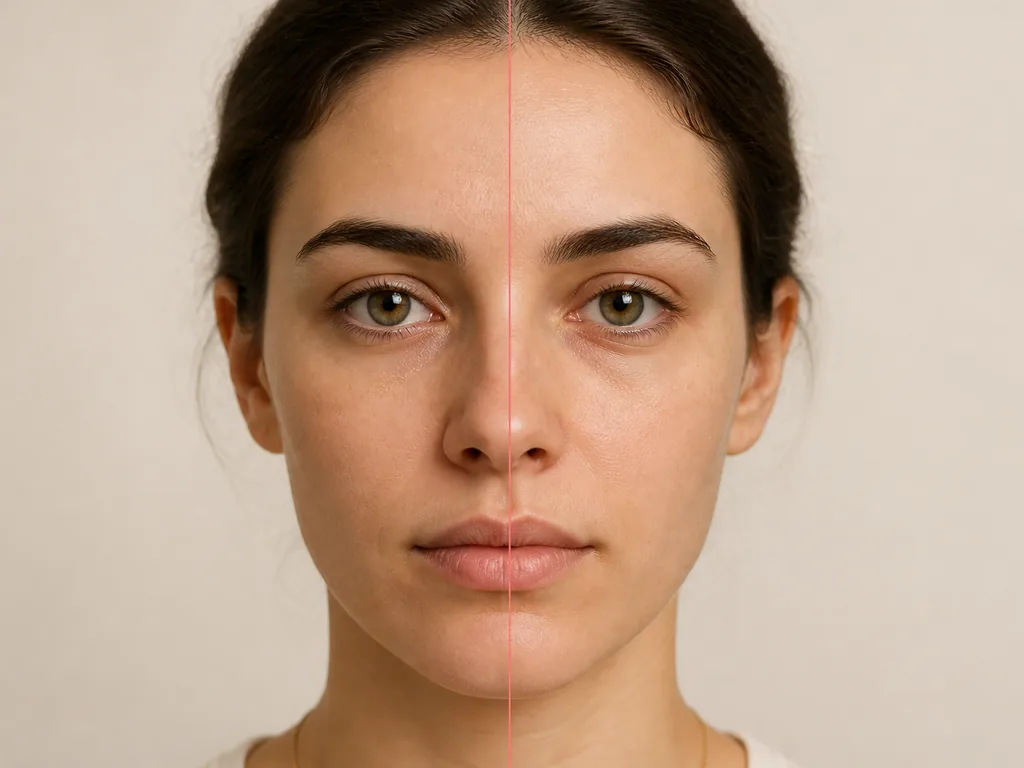
What a Face Symmetry Test Actually Compares
A Midline, Paired Points, One Score
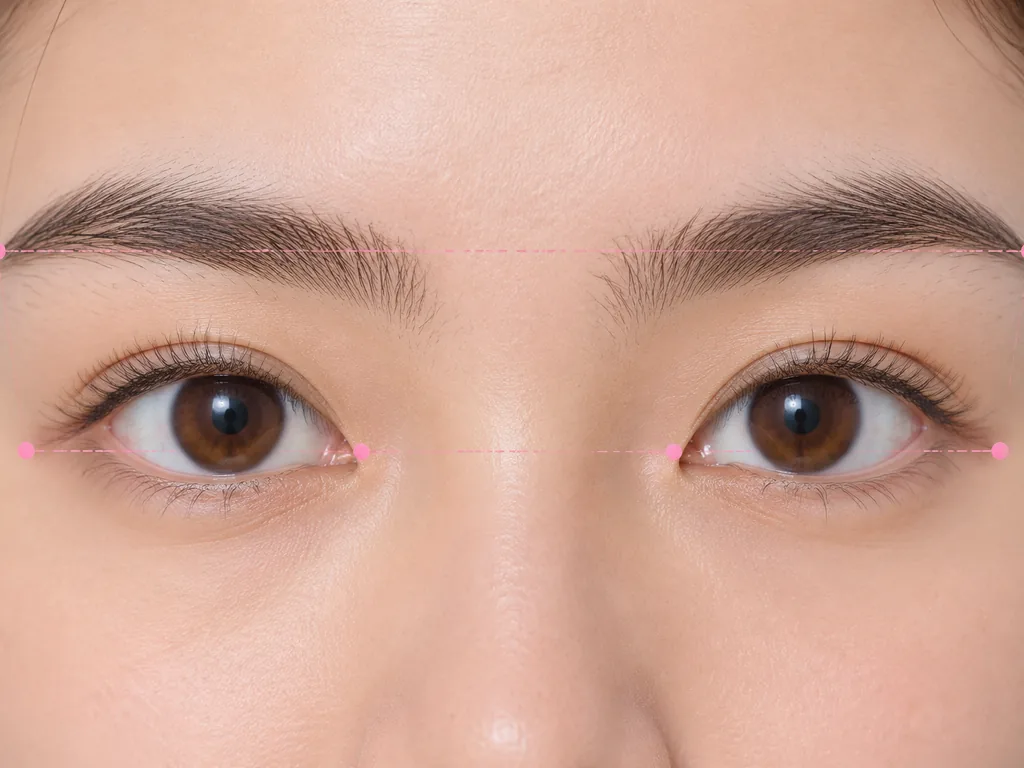
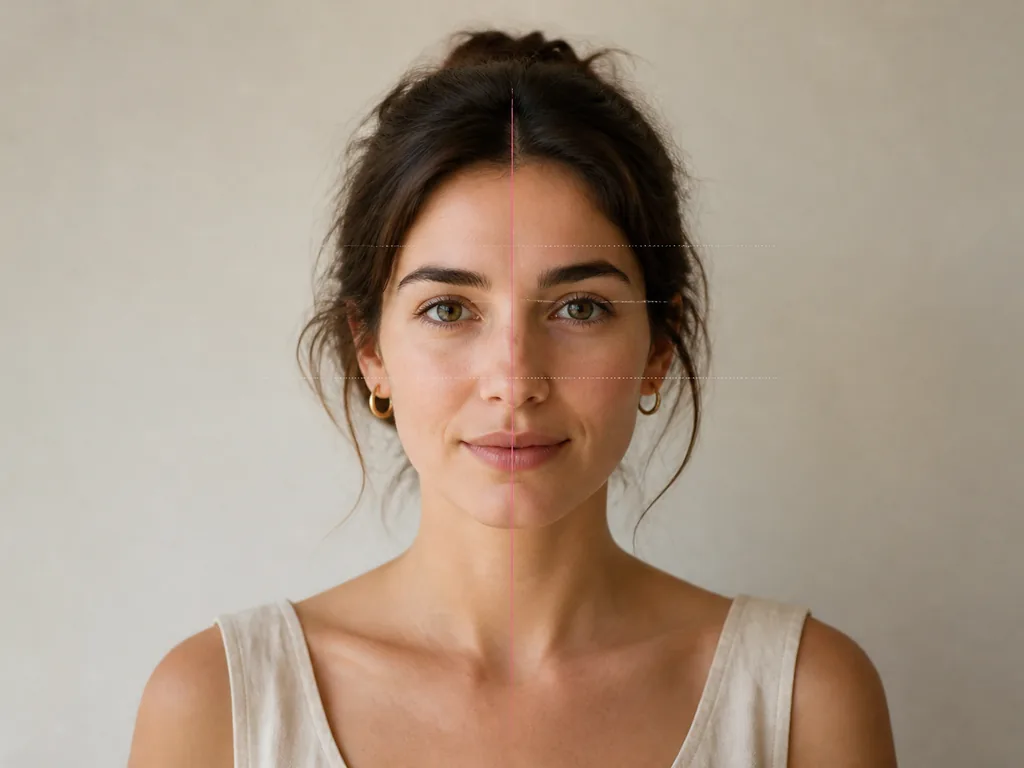
The test starts with a vertical midline drawn through the bridge of your nose. Landmarks on the left and right of the face are then compared in pairs: eye corners, brows, cheekbones, jaw, and the corners of the mouth. What gets measured is each point's distance to that line, not the distance between the two points of a pair. The closer each pair sits to the same distance from that line, the higher your symmetry score. FaceReport reports the result as a single symmetry score, and the overlay shows which part of the face moved it.
The Difference, Mirrored Onto Your Face
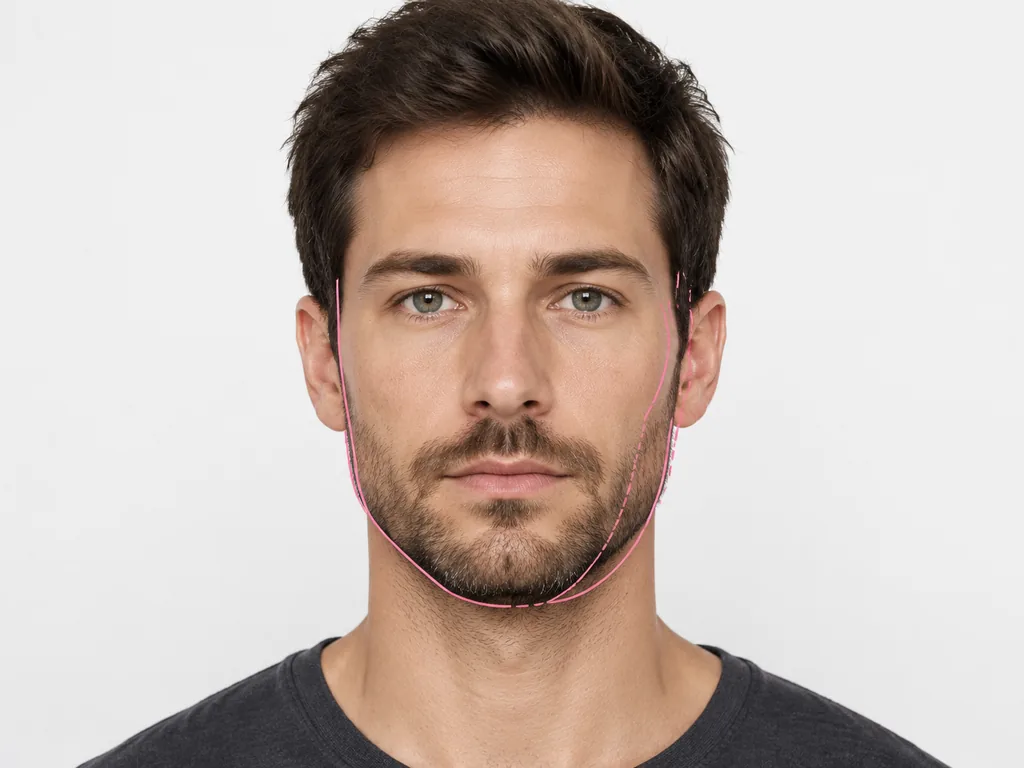
A score on its own tells you that a gap exists, not where it is. FaceReport duplicates your detected facial contour, flips it, and lays it back over your photo. The result is one image in which a side of your face is compared with its own mirror image, so you can see whether the difference sits at the jaw, around the eyes, or at the corner of the mouth. That picture is usually easier to act on than a number.
Same Photo, Same Score
Every value comes from the landmarks detected in that image, and the detection does not change between runs. Run the same file twice and the symmetry score comes back the same. What does change the number is the photo itself: head rotation, the distance to the camera, the direction of the light, and how relaxed your expression is. That is why a comparison between two photos is only fair when both were shot the same way.

Symmetry Is One Measurement, Not the Verdict
Symmetry is one of four dimensions in the report, next to facial thirds, facial fifths, and golden-ratio alignment. A face can be nearly even from left to right and still carry a shorter lower third, and the opposite happens just as often. Keeping the dimensions apart means a low symmetry score cannot quietly drag the whole result down. If you want to see how the other three are measured, the face analysis page walks through each one.
How to Check Face Symmetry in Three Steps
1. Take One Straight-On Photo
Shoot at eye level with the phone held still, keep a neutral expression, and use even light from the front. Pull your hair back so the forehead and jaw stay visible, because a hidden edge changes where the landmarks land.
2. Let the Test Map Your Landmarks
The page detects your landmarks and draws the midline inside the browser. Nothing is sent to a server, so there is no upload step and no queue to wait in.
3. Read the Score Next to the Overlay
Look at the mirrored contour first, then at the number. If you want a second data point, take another photo from the same distance and compare those two results with each other rather than with someone else.
Why Use This Face Symmetry Checker
Your Photo Never Leaves the Browser
Landmark detection and scoring run on your device. There is no upload, no storage, and no account holding a copy of your face.
The Gap Is Drawn, Not Just Scored
Your contour is mirrored over the original photo, so the left and right difference has a location instead of only a number.
Free and Open, No Sign-Up Wall
Open the page, add one photo, read the result. No email, no card, and no credit system stands between you and the score.
One Photo, One Repeatable Number
The same file returns the same symmetry score every time, which is what makes two of your own photos worth comparing.
Phone, Tablet, or Desktop
The test runs in any modern browser, so the photo already sitting on your phone is enough to start.
A Measurement, Not a Verdict
These scores are geometric heuristics, not clinical measurements, and they say nothing about your worth.